The Problem
Households lack a simple, affordable tool to track fridge contents — leading to expired food, wasted money, and unnecessary environmental harm.
Study Profile
- MethodDiary Study
- Duration2 Days
- Participants3 Home Users
- SettingHome Kitchens
- HardwareArduino + RFID
- CourseDigital Fabrication
The Scale of the Problem
Skills & Tools Applied
Hardware Architecture
The Device in Action
Each food item is assigned an RFID tag pre-encoded with the item's name and expiry data. On scan, the device instantly recognises the item and registers the interaction timestamp.
How PantryPal Works
Notification States
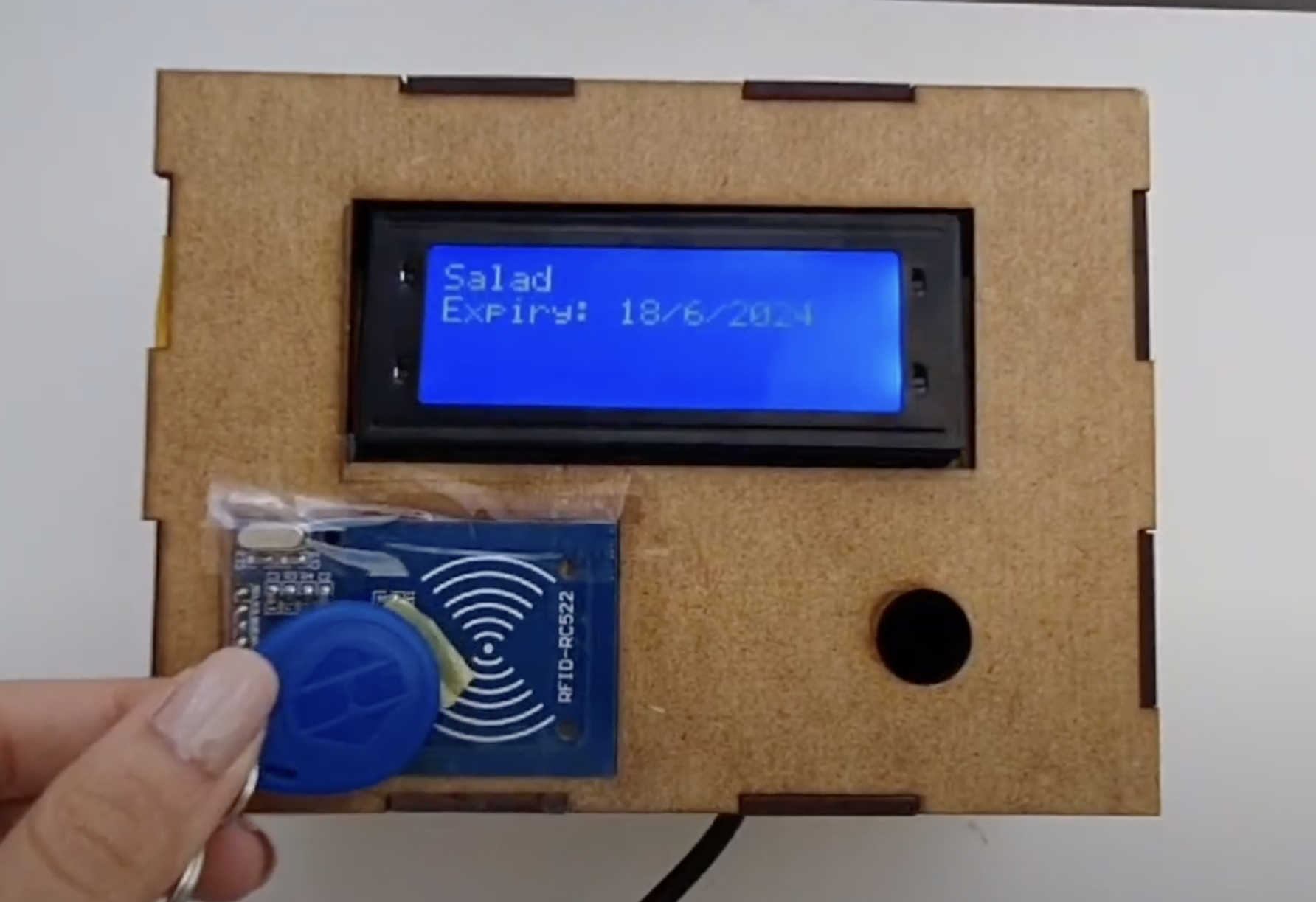
Item scanned successfully — name and expiry date displayed.
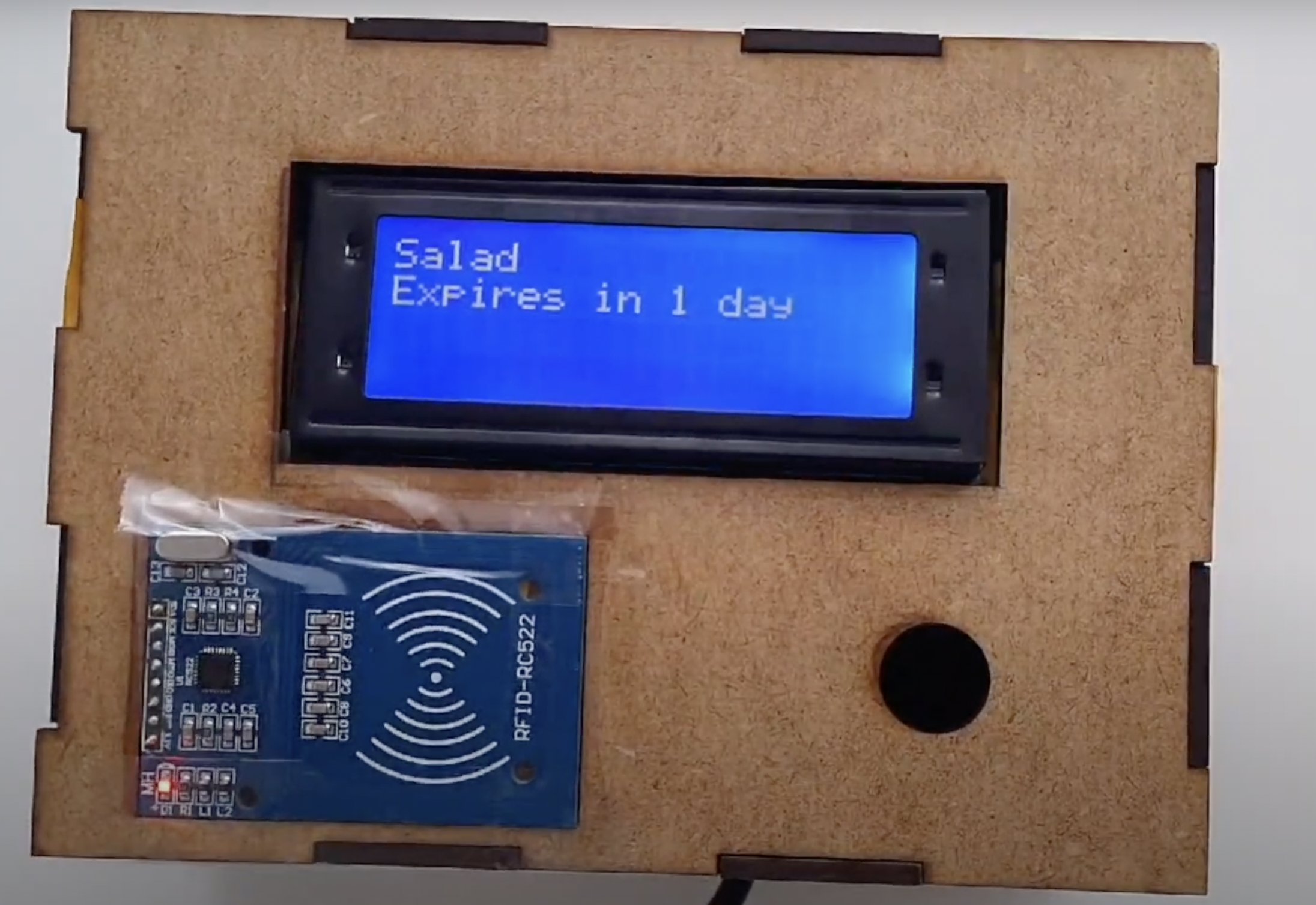
24-hour advance warning — prompts user to use the item.
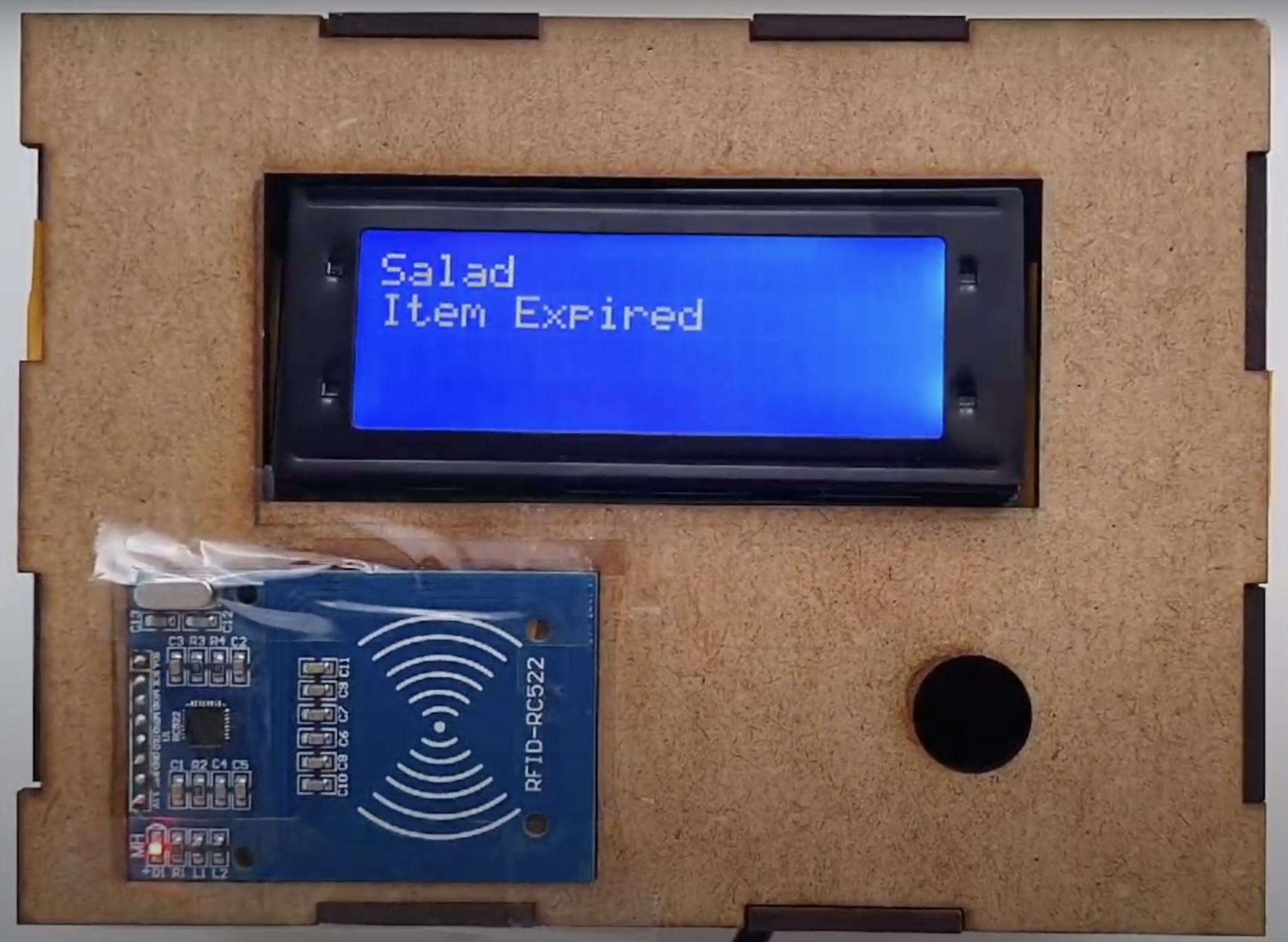
Post-expiry alert — item should be discarded or composted.
Diary Study Methodology
Participants self-documented every interaction with PantryPal — items scanned, notifications received, and subjective impressions throughout the day.
Structured prompts were sent at set intervals: "What did you scan today?" and "Did you receive a notification?"
Text messages were sent daily to verify active engagement with the device and to capture immediate, in-context feedback.
Study Results at a Glance
Reduced cognitive load — participants no longer had to mentally track what was in the fridge or when things would expire.
Money savings — users consciously avoided buying duplicate items they already had at home.
Reduced food waste — timely alerts prompted use of near-expiry items before they were discarded.
Grocery planning aid — the device helped users cross-reference fridge contents while shopping.
User feedback was largely positive across all three participants, validating the core concept of dedicated food tracking hardware.
Voices from the Field
"Sometimes I just want to scan the item and check the name and time left, but every time I scan it sets the expiry even further than the previously scanned time."
— Participant, re: Multiple Scan Issue"When I buy things in bulk, I freeze most of the items… so the life of the item increases. I want to be able to set the expiry date myself."
— Participant, re: Manual Date Setting"I used the salad before expiry and then the next day I got an expiry notification."
— Participant, re: Scan State Tracking"When I am out doing grocery runs, I can't check available items on my phone. It will make my life even easier."
— Participant, re: Push NotificationsUsability Issues Identified
Rescanning an item resets its expiry date and no visual state confirmed whether an item had already been logged — creating confusion and inaccurate tracking.
Users who freeze fresh produce need to extend shelf life manually. The fixed-date system did not accommodate varying storage conditions.
No button to acknowledge a notification meant alerts persisted even after action was taken, and the system had no way to know if the fridge was empty.
Users strongly desired mobile push notifications to check fridge inventory remotely — especially useful during grocery shopping trips.
Product Demo
Future Iterations
Smart Home Integration — embed directly into refrigerators for automatic inventory tracking.
Automatic Inventory Updates — real-time availability data accessible via companion app.
Mobile Push Notifications — alert users on-the-go with fridge status during grocery runs.
Recipe Recommendations — suggest meals based on items nearing expiry to further reduce waste.
Conclusion
PantryPal demonstrated that a dedicated, low-cost hardware device can meaningfully reduce cognitive overhead and food waste in domestic settings.
The diary study validated the core concept while surfacing four targeted usability improvements. These insights form a concrete, user-centered roadmap for future development — from manual date control to smart home integration.
Technology doesn't have to be complex to be impactful — simplicity and dedicated purpose are PantryPal's greatest strengths.